The Modern Automotive Detailing Business
The automotive detailing industry has changed significantly. What was once considered an advanced version of car washing has developed into a specialized industry focused on vehicle appearance, paint protection, restoration, technical expertise, and customer experience.
Today, vehicle owners have access to more information, more products, and more professional services than ever before. Customers can research ceramic coatings, Paint Protection Film (PPF), paint correction, interior restoration, and maintenance detailing before they even visit a studio.
This change has also raised expectations.
A modern customer does not simply want a vehicle that looks clean for a few days. They want professional workmanship, clear communication, quality products, reliable results, and a service experience that reflects the value of their vehicle.
For a modern automotive detailing business, this means that success depends on much more than having good products and expensive equipment. It requires the right combination of people, process, technology, service quality, and business management.
The Detailing Maniacs, for example, positions professional vehicle care around detailing, PPF, ceramic and graphene coatings, foam washing, and restoration services, with an emphasis on professional techniques and premium products.
From Car Washing to Professional Vehicle Care
The traditional car wash primarily focuses on cleaning the exterior of a vehicle.
Professional detailing takes a much broader approach.
A detailing process can involve inspection, cleaning, decontamination, polishing, paint correction, interior restoration, surface protection, and final quality inspection.
Depending on the vehicle and customer requirements, professional services may include:
- Paint correction
- Ceramic and graphene coatings
- Paint Protection Film
- Interior deep cleaning
- Leather treatment
- Glass treatment
- Wheel and tyre care
- Headlight restoration
- Maintenance detailing
These services require different techniques, tools, products, and levels of technical knowledge.
The Detailing Maniacs similarly describes detailing as a process of restoring, protecting, and enhancing both the interior and exterior of a vehicle rather than simply cleaning its surface.
This shift is important because it changes the role of a detailing business. It is no longer simply selling cleaning.
It is selling vehicle care and protection.
Customers Are Becoming More Informed
One of the biggest changes in the automotive detailing industry is the amount of information available to customers.
A vehicle owner can now research:
- Ceramic coating durability
- PPF technology
- Paint correction
- Paint thickness
- Coating maintenance
- Detailing products
- Interior protection
- Different detailing techniques
Social media, YouTube, automotive communities, and online reviews have made customers more knowledgeable.
As a result, simply saying that a product is “premium” may not be enough.
Customers increasingly want to understand what is being done, why it is being done, and what result they can realistically expect.
A professional detailing business should therefore educate customers instead of simply selling packages.
Process Matters More Than Product
Premium products are important, but products alone do not create professional results.
The outcome of a detailing service depends on the complete process.
For example, before applying a protective coating, the vehicle may require proper washing, decontamination, paint inspection, and surface preparation.
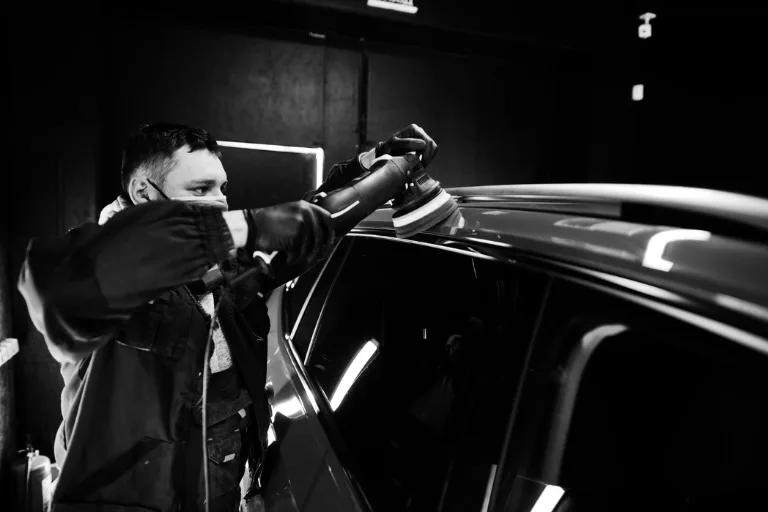
Similarly, paint correction requires an understanding of paint condition, defects, machine selection, pad selection, compound selection, and polishing technique.
A structured process helps technicians deliver more consistent results.
This is why professional detailing should be approached as a system rather than a collection of products. The Detailing Maniacs also emphasizes the importance of inspection, preparation, correction, protection, and quality control in professional detailing.
Skilled Technicians Are the Foundation
Equipment can improve efficiency, but skilled technicians remain central to detailing quality.
A technician needs to understand the vehicle surface and the limitations of the process.
For example, removing every visible paint defect may not always be appropriate if doing so requires excessive material removal. The technician must understand the balance between correction and preservation.
Training should therefore cover more than product application.
A strong training program can include:
- Surface inspection
- Safe washing techniques
- Paint decontamination
- Machine polishing
- Paint correction
- Coating preparation
- PPF handling
- Interior material care
- Product selection
- Quality inspection
The goal is to develop technicians who understand why a particular process is being used, not simply technicians who follow instructions mechanically.
Technology Is Reshaping Detailing Studios
Modern detailing studios increasingly use technology to improve precision and consistency.
Examples include:
- Paint thickness gauges
- Professional inspection lighting
- Dual-action and rotary polishers
- Infrared curing systems
- Steam cleaning equipment
- Digital job cards
- Online booking systems
- Customer management software
- Digital before-and-after documentation
Technology should not replace technical skill.
Instead, it should help technicians make better decisions and help businesses manage their operations more effectively.
A paint thickness gauge, for example, can provide useful information before paint correction. Professional lighting can reveal defects that may not be visible under ordinary lighting.
The combination of technology + technician expertise creates a stronger workflow.
Premium Services Require Premium Processes
Services such as PPF and ceramic coatings require particularly careful execution.
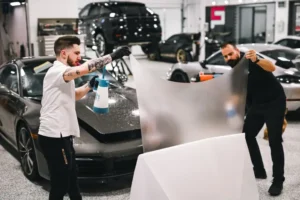
PPF installation involves surface preparation, film handling, positioning, application, edge management, and finishing.
Ceramic coating requires appropriate preparation because contamination or poor surface condition can affect the final result.
The same principle applies to paint correction.
The more technically demanding the service, the more important the process becomes.
A professional detailing studio should therefore have clearly defined procedures for each major service.
Customer Experience Is Part of the Product
A customer’s experience does not begin when the technician starts working on the vehicle.
It begins when the customer first contacts the business.
A professional customer journey can include:
Enquiry → Consultation → Vehicle Inspection → Service Recommendation → Booking → Service → Quality Check → Delivery → Aftercare
Every stage creates an opportunity to build trust.
Customers should understand:
- What service is recommended
- Why it is recommended
- What the service includes
- How long it may take
- What results are realistic
- How the vehicle should be maintained afterward
Clear communication reduces confusion and creates a more professional experience.
Quality Control Should Be Standardized
One of the biggest differences between an informal detailing operation and a professional studio is consistency.
Quality should not depend entirely on individual technician habits.
A studio can establish checkpoints such as:
Before Service
Document the vehicle’s existing condition and identify visible defects.
During Service
Follow the defined process and inspect critical stages.
Before Delivery
Conduct a detailed final inspection under appropriate lighting.
At Handover
Explain completed work and provide relevant maintenance guidance.
This creates accountability and helps reduce avoidable rework.
Inventory Management Also Matters
A professional detailing studio can use a substantial number of products and consumables.
These may include:
- Shampoos
- APCs and cleaners
- Compounds
- Polishes
- Pads
- Microfiber towels
- Coatings
- PPF materials
- Applicators
- Interior chemicals
- Protective products
Poor inventory management can increase operating costs.
Products can be over-purchased, misplaced, wasted, or used inefficiently.
A modern business should understand product consumption and maintain appropriate inventory levels.
This becomes even more important as a detailing studio grows or operates multiple locations.
Profitability Requires More Than More Cars
A detailing studio can be busy without being genuinely profitable.
Revenue alone does not tell the complete story.
Management should understand the cost of delivering each service.
Important factors include:
- Technician time
- Product consumption
- Consumables
- Equipment usage
- Facility costs
- Rework
- Marketing costs
- Customer acquisition
- Service duration
For example, a high-value service that occupies a technician for significantly longer than expected may have a different margin than its headline selling price suggests.
Understanding these numbers helps businesses improve pricing, productivity, and service design.
Building a Scalable Detailing Business
A successful detailing studio should not depend entirely on one technician’s individual knowledge.
Processes need to be documented.
Standard operating procedures can define:
- Vehicle preparation
- Washing procedures
- Inspection requirements
- Product selection
- Machine settings
- Application techniques
- Quality checkpoints
- Handover procedures
This makes training easier and helps maintain consistency when the business grows.
For businesses exploring expansion, franchising can also make standardization especially important. The Detailing Maniacs highlights training, marketing, operational support, and a franchise-ready business model as part of its business proposition.
The Importance of Brand Trust
In premium automotive detailing, trust is extremely important.
Customers are handing over vehicles that can be worth substantial amounts of money.
They want confidence that:
- Their vehicle will be handled carefully
- Technicians understand the service
- The promised process will be followed
- Products are appropriate
- The final result will be inspected
- The business will support them after delivery
A strong brand therefore comes from more than logos and advertising.
It comes from consistent delivery.
Every completed vehicle becomes part of the brand’s reputation.
The Future of the Modern Automotive Detailing Business
The detailing industry will continue to evolve as vehicle technology, protection products, customer expectations, and business models change.
Electric vehicles, premium finishes, advanced coatings, PPF technologies, digital booking, customer management systems, and professional training are all influencing how detailing businesses operate.
However, the fundamentals remain the same.
A business needs:
Skilled People.
Reliable Processes.
Quality Products.
Appropriate Technology.
Strong Customer Experience.
Effective Business Management.
When these elements work together, a detailing studio can move beyond individual services and build a sustainable professional operation.