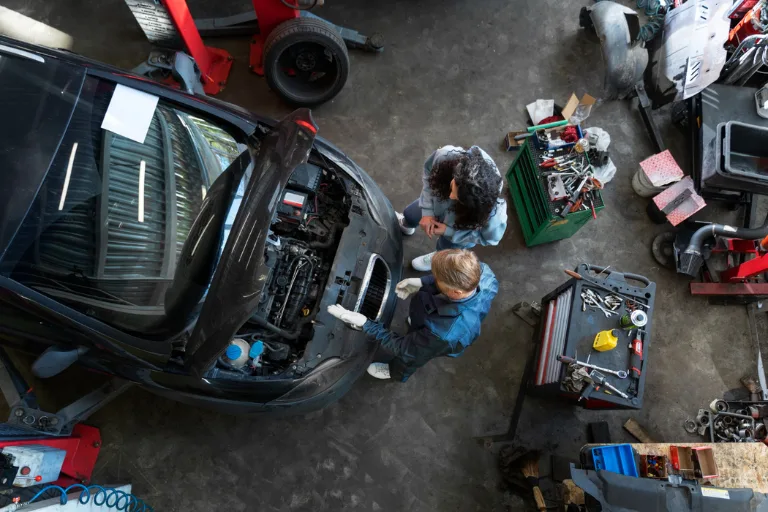
What Makes a Professional Detailing Studio Different?
A clean car does not necessarily mean a professionally detailed car.
As the automotive detailing industry has developed, customers have access to a wide range of detailing studios, mobile detailers, car washes, coating centres, and specialist automotive care businesses. Many of them offer similar services and use similar product terminology.
So what actually makes a professional detailing studio different?
The answer is not simply the brand of products used or the price of the service.
A professional studio is defined by the complete system behind the service—from vehicle inspection and preparation to technician training, equipment, process control, quality inspection, and customer communication.
For customers investing in paint correction, ceramic coating, PPF, interior restoration, or other premium services, these differences can have a significant impact on the final result.
A Professional Studio Starts With Inspection
One of the first differences between a professional detailing studio and a basic cleaning operation is what happens before the work begins.
A professional technician does not immediately start washing or polishing the vehicle.
The vehicle should first be assessed.
The inspection may identify:
- Paint defects
- Scratches
- Swirl marks
- Water spots
- Oxidation
- Previous repairs
- Contamination
- Interior damage
- Existing coatings or protection
The condition of the vehicle helps determine which process is appropriate.
This is particularly important for paint correction and other technical services because every vehicle does not require the same treatment.
Process Comes Before Product
The detailing industry has thousands of products available.
Different shampoos, compounds, polishes, pads, coatings, cleaners, dressings, and protection products all have their specific applications.
However, using an expensive product does not automatically produce a professional result.
The process surrounding the product is equally important.
For example, paint correction requires appropriate preparation, inspection, pad and compound selection, machine control, working technique, and final inspection.
Similarly, ceramic coating performance depends heavily on surface preparation and application conditions.
A professional studio therefore focuses on how the service is performed, not just what product is being used.
Trained Technicians Make a Difference
Detailing is a skill-based industry.
Machines and products can support a technician, but they cannot replace technical understanding.
A trained technician should understand how different surfaces respond to different processes.
For example, paint can vary in hardness, thickness, condition, and previous repair history.
A technician needs to know when to correct, when to refine, and when attempting further correction may create unnecessary risk.
Professional training should therefore cover:
- Vehicle inspection
- Safe washing
- Decontamination
- Machine polishing
- Paint correction
- Surface preparation
- Coating application
- Interior material care
- PPF handling
- Final inspection
The goal is to create technicians who can make informed decisions rather than simply follow a checklist.
Professional Equipment Supports Precision
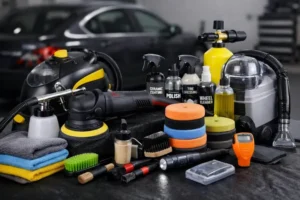
A professional studio also invests in equipment that allows technicians to inspect and work on vehicles accurately.
Depending on the service, this can include:
- Professional inspection lights
- Dual-action polishers
- Rotary polishers
- Paint thickness gauges
- Steam equipment
- Air blowers
- Extractors
- Coating application equipment
- Controlled working areas
The purpose of professional equipment is not to make the studio look impressive.
It should improve accuracy, efficiency, safety, and consistency.
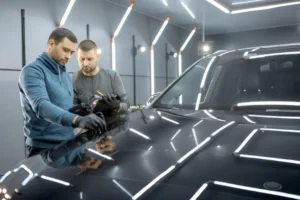
For example, suitable inspection lighting can reveal defects that may not be visible under ordinary showroom lighting.
Clean Working Conditions Matter
The environment in which detailing is performed can influence the quality of the work.
Dust, contamination, poor lighting, excessive heat, humidity, and inadequate workspace can make certain detailing processes more difficult.
A professional studio therefore pays attention to its working environment.
A well-organized studio should have appropriate areas for:
- Vehicle preparation
- Washing
- Paint correction
- Coating application
- PPF installation
- Interior work
- Final inspection
Good housekeeping also reduces the possibility of cross-contamination between different stages of the detailing process.
Paint Correction Requires Technical Understanding
Paint correction is one of the clearest examples of why professional detailing is different from simple car cleaning.
The objective is not simply to make the paint appear glossy.
The technician needs to understand the defects and determine an appropriate correction strategy.
Common paint defects include:
- Swirl marks
- Fine scratches
- Oxidation
- Water spots
- Holograms
- Paint imperfections
- Random isolated defects
A professional approach considers the condition of the paint before deciding how aggressive the correction should be.
The objective should be to achieve an appropriate improvement while preserving the integrity of the paint system.
Surface Preparation Is Critical
Many premium detailing services depend heavily on preparation.
A coating cannot compensate for poor preparation.
A protective film cannot hide every underlying surface problem.
A polish cannot perform properly on a contaminated surface.
Preparation may involve washing, chemical decontamination, mechanical decontamination, drying, inspection, polishing, and surface preparation before protection is applied.
This is one reason professional detailing often takes considerably longer than a basic cleaning service.
Time is being invested in the process, not simply the final appearance.
Quality Control Should Be Part of the Service
A professional studio should not consider the job finished simply because the technician has completed the final step.
There should be a final inspection.
This can include checking:
- Paint finish
- Polishing quality
- Coating coverage
- Edges and difficult areas
- Glass
- Wheels
- Interior surfaces
- Trim
- Missed contamination
- Residue
Inspection lighting can be particularly useful for identifying finishing issues.
A second-person inspection can also provide an additional level of quality control where the business’s workflow allows for it.
The purpose is simple:
Find problems before the customer does.
Documentation Creates Transparency
Professional studios can also use documentation to improve customer confidence.
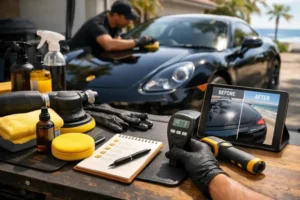
Before-and-after photographs can record vehicle condition.
Digital job cards can record:
- Vehicle details
- Customer requirements
- Services selected
- Existing defects
- Work completed
- Products used
- Recommendations
This information can become part of the vehicle’s service history.
For customers with premium or collectible vehicles, documented care can be particularly valuable.
Customer Consultation Is More Important Than Selling Packages
A professional detailing studio should not recommend the most expensive service automatically.
The recommendation should be based on the vehicle and the customer’s objectives.
For example, a customer may want:
Appearance improvement
Another may want:
Long-term paint protection
Another may want:
Ease of maintenance
Someone else may be preparing a vehicle for resale or a special event.
These objectives can lead to different service recommendations.
A proper consultation helps identify the customer’s actual requirement before a service is selected.
Clear Expectations Build Trust
Professional detailing cannot reverse every defect or make every vehicle look factory-new.
Customers should understand what a service can realistically achieve.
For example, some deep scratches may remain because complete removal could require excessive paint removal.
Similarly, ceramic coatings provide protection and easier maintenance, but they do not make a vehicle immune to scratches or environmental damage.
Honest communication about limitations is part of professional service.
It helps customers understand the difference between realistic results and marketing promises.
Premium Services Require Specialized Processes
A professional studio may offer services such as:
- Paint correction
- Ceramic coating
- Graphene coating
- Paint Protection Film
- Interior detailing
- Leather protection
- Glass protection
- Wheel coating
- Maintenance detailing
Each service requires its own workflow.
For example, PPF installation involves film preparation, precise positioning, application, edge management, and finishing.
Coating application requires controlled preparation and appropriate curing conditions.
This is why simply adding a service to a price list does not automatically mean a business is equipped to deliver it professionally.
Inventory and Product Management Matter Too
Professional detailing studios use a wide variety of products and consumables.
Poor inventory management can affect both efficiency and profitability.
A studio should know:
- Which products are available
- How quickly products are consumed
- Which products are nearing expiry
- Which consumables require regular replenishment
- Which products are being overused
Inventory visibility can help prevent unnecessary purchasing and reduce interruptions during service.
The customer may never see this part of the operation, but it contributes to the studio’s overall efficiency.
Professionalism Continues After Delivery
The relationship with the customer should not end when the vehicle leaves the studio.
Aftercare is an important part of premium detailing.
Customers may need guidance about:
- Washing methods
- Maintenance intervals
- Suitable products
- Coating maintenance
- PPF care
- Things to avoid
- Future inspection
Good aftercare guidance helps customers maintain the results achieved by the studio.
It also creates an opportunity for long-term customer relationships and maintenance services.
What Customers Should Look For
When choosing a professional detailing studio, customers can ask practical questions.
Does the studio inspect the vehicle before starting?
Can the studio explain the process?
Are technicians trained?
Does the business document the vehicle condition?
What equipment is used?
How is quality checked?
Are realistic results explained?
Is aftercare guidance provided?
These questions can reveal much more about a detailing business than a product list alone.
Professional Detailing Is a System
Ultimately, the biggest difference is the system behind the service.
A professional studio brings together:
People — trained and experienced technicians.
Process — defined and repeatable workflows.
Products — appropriate products for specific applications.
Equipment — tools that support precision.
Environment — suitable working conditions.
Quality Control — inspection before delivery.
Customer Experience — clear communication and aftercare.
When these elements work together, the customer receives more than a visually improved vehicle.
They receive a structured professional service.