

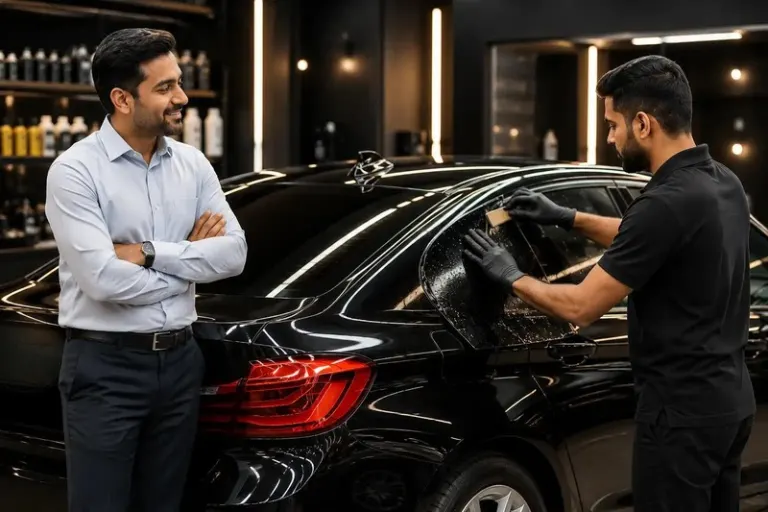
How to Explain Detailing Services to Customers Without Overpromising
In the professional automotive detailing industry, delivering quality work is only one part of building a successful business. The way a detailing studio communicates with customers is equally important.
Customers often approach a detailing business with a specific expectation. They may want every scratch removed, a ceramic coating that lasts for years without maintenance, a completely stain-free interior, or paint protection that prevents all damage.
However, detailing services have practical limitations. Paint condition, vehicle age, surface materials, previous repairs, environmental exposure, and maintenance habits can all influence the final result.
This creates an important responsibility for detailing professionals: explain what a service can realistically achieve without making promises that cannot be guaranteed.
Clear communication helps customers understand the value of the service, make informed decisions, and feel confident about the work being performed.
For detailing studios, honest service explanations can also reduce misunderstandings, improve customer satisfaction, and support long-term business relationships.
In this article, we explore how professional detailers can explain their services clearly, manage expectations, and communicate confidently without overpromising.
1. Understand the Customer’s Actual Requirement First
Before recommending a detailing package, understand what the customer wants to achieve.
A customer asking for a “full detail” may have very different expectations from another customer requesting the same service.
One customer may want to improve the vehicle’s appearance before selling it. Another may want to maintain a recently purchased luxury car. A third may be concerned about scratches, stains, or paint protection.
Start by asking a few simple questions:
- What is the main concern with your vehicle?
- Is the vehicle regularly used or mostly parked?
- Have you previously applied ceramic coating or PPF?
- Are you concerned about paint defects or interior cleanliness?
- What result are you expecting from the service?
- Are you preparing the vehicle for sale, daily use, or long-term ownership?
These questions help the detailer recommend a suitable service rather than automatically suggesting the most expensive package.
Example: Customer Asking for Paint Correction
Instead of saying:
“We will make your car’s paint completely flawless.”
A professional detailer can say:
“Let us inspect the paint condition first. Based on the defects and paint safety, we can recommend the appropriate correction level and explain the expected improvement.”
This approach communicates expertise without creating unrealistic expectations.
2. Explain What Each Detailing Service Actually Includes
Customers may not fully understand the difference between a basic wash, maintenance detailing, paint correction, ceramic coating, and Paint Protection Film.
A clear service explanation should describe the work included, the intended result, and any limitations.
| Detailing Service | What It Generally Includes | What Should Not Be Promised |
| Exterior Detailing | Cleaning, decontamination where applicable, surface care | Permanent cleanliness or scratch removal |
| Interior Detailing | Cleaning and treatment of suitable interior surfaces | Complete removal of every stain or odour |
| Paint Correction | Polishing to improve the appearance of paint defects | Removal of every scratch regardless of depth |
| Ceramic Coating | Surface protection, hydrophobic behaviour, and easier maintenance, depending on product | Immunity from scratches, chips, or all environmental damage |
| Paint Protection Film (PPF) | Physical film protection against certain impacts and surface damage | Complete protection against every impact or damage |
| Headlight Restoration | Improving clarity of suitable oxidized or deteriorated headlights | Guaranteed restoration of every damaged headlight |
The exact inclusions depend on the service package, product, vehicle condition, and studio process.
A written service description can help customers understand what they are paying for.
3. Set Realistic Expectations for Paint Correction
Paint correction is one of the services where customers may expect more than the process can safely deliver.
Customers sometimes assume that polishing will remove every scratch and make the paint look exactly like a new vehicle.
In reality, the outcome depends on the type and depth of the defect, paint condition, available clear coat, previous repairs, and the correction process.
Explain the Difference Between Defect Types
Light swirl marks: These may often be improved through suitable polishing.
Moderate scratches: Some may be reduced or removed, depending on their depth and the paint condition.
Deep scratches: These may remain visible if removing them would compromise paint safety.
Stone chips: These generally require a different repair process rather than routine polishing.
Paint oxidation: Suitable oxidation may improve with correction, but severely damaged paint may require refinishing.
Professional Customer Explanation
Instead of saying:
“We will remove 100% of the scratches.”
Say:
“Our paint correction process is designed to improve the visible defects. The achievable result depends on the depth of the scratches and the condition of the clear coat. We will inspect the vehicle and explain the expected improvement before starting.”
Paint correction guidance emphasizes assessing the vehicle, identifying the defects, and agreeing on a realistic correction target with the customer.
Ask a Pro Blog+1
4. Explain Ceramic Coating Without Guaranteeing Unrealistic
Ceramic coating is often misunderstood by customers.
Some believe it makes the vehicle completely scratch-proof, eliminates the need for washing, or guarantees a fixed number of years of performance regardless of usage.
A professional detailing studio should explain the benefits and limitations clearly.
What Ceramic Coating Can Offer
Depending on the product and application:
- Improved surface gloss
- Hydrophobic behaviour
- Easier routine cleaning
- Resistance to certain environmental contaminants
- Surface protection within the product’s intended performance range
What Ceramic Coating Cannot Guarantee
- Complete scratch prevention
- Protection against every stone chip
- Immunity from water spots
- No need for regular washing
- Permanent protection
- Identical durability under every driving and maintenance condition
Example of Professional Communication
Instead of saying:
“This coating will protect your car for five years without any issues.”
Say:
“This coating is rated for up to the specified duration under the manufacturer’s conditions. Its performance depends on preparation, driving conditions, washing methods, and maintenance. We will also provide the recommended aftercare instructions.”
Using phrases such as “up to,” “subject to maintenance,” and “based on the vehicle’s condition” can help set appropriate expectations.
5. Explain PPF Protection in Simple Language
Paint Protection Film is a physical protective film applied to selected vehicle surfaces.
Customers may expect PPF to prevent all scratches, dents, and paint damage. However, the level of protection depends on the film type, installation quality, coverage, and impact conditions.
Explain the Benefits Clearly
PPF may help protect against:
- Certain stone chips and road debris impacts
- Minor surface abrasions
- Some scratches within the film’s performance capability
- Environmental exposure, depending on film specifications
Explain the Limitations
PPF cannot guarantee protection against:
- All stone impacts
- Deep cuts or severe damage
- Dents
- Every type of collision
- Damage caused by improper care or installation
Example of Professional Communication
Instead of saying:
“Your car will never get scratched after PPF.”
Say:
“PPF provides a protective layer against certain types of surface damage and road debris. It can reduce the risk of paint damage, but severe impacts or deep cuts may still affect the film or the paint underneath.”
The service should also clearly specify which panels or areas are covered.
Ask a Pro Blog+1
6. Use Simple Language Instead of Technical Jargon
Technical terminology can make a service sound complicated to customers who are unfamiliar with automotive detailing.
Terms such as “decontamination,” “abrasive correction,” “micromarring,” “flash time,” and “hydrophobicity” may be common among technicians, but customers may not understand them.
The objective is not to avoid technical knowledge. It is to translate that knowledge into language customers can easily understand.
| Technical Term | Customer-Friendly Explanation |
| Paint Decontamination | Removing bonded contaminants from the paint surface |
| Paint Correction | Polishing the paint to improve the appearance of scratches and swirl marks |
| Ceramic Coating | A protective coating that helps improve gloss and makes maintenance easier |
| Hydrophobic Effect | The surface causes water to bead and shed more easily |
| PPF | A transparent film that helps protect the vehicle’s paint |
| One-Step Correction | A single polishing stage designed to improve gloss and reduce suitable defects |
| Two-Step Correction | A cutting stage followed by a refining stage |
| Clear Coat | The transparent outer layer of the vehicle’s paint |
A Better Way to Explain a Process
Instead of:
“We will perform decontamination, abrasive correction, and a panel wipe before coating.”
Say:
“We will first thoroughly clean the vehicle, remove bonded contaminants, polish the paint if required, and prepare the surface before applying the protective coating.”
Simple explanations improve understanding and make the customer feel included in the process.
7. Be Transparent About Pricing and Additional Work
Pricing misunderstandings can damage customer relationships.
A customer may approve a detailing package based on the initial quotation and later become frustrated when additional charges appear.
To avoid this, explain:
- What the package includes
- What is excluded
- The estimated service duration
- Additional charges for excessive contamination
- Additional work that requires separate approval
- Applicable warranty or aftercare terms
- Payment and delivery conditions
Example
Suppose a customer book an interior detailing package.
During inspection, the technician discovers severe pet hair contamination and extensive stains.
Instead of proceeding with additional work without permission, explain:
“The selected package covers standard interior cleaning. Your vehicle has heavy pet hair and deep stains that may require additional time and treatment. We can explain the extra work and cost before proceeding.”
This helps the customer make an informed decision.
8. Show the Customer the Vehicle’s Existing Condition
A professional vehicle inspection is an important part of customer communication.
Before starting a detailing service, document the vehicle’s existing condition.
Take photographs or videos of:
- Existing scratches
- Paint chips
- Wheel damage
- Interior stains
- Torn upholstery
- Damaged trim
- Previous repairs
- Existing PPF or coating condition
This documentation helps establish a clear record before the service begins.
It is especially useful when working with premium and luxury vehicles.
Explain the Findings Before Starting
For example:
“During the inspection, we noticed existing scratches on the front bumper and a few paint defects on the door panels. We have documented these areas. We will focus on improving the defects that can be safely corrected.”
This approach prevents confusion during vehicle delivery.
9. Use Before-and-After Images Responsibly
Before-and-after images are valuable for demonstrating detailing work.
However, they should accurately represent the service performed.
Avoid:
- Using unrelated vehicle images
- Over-editing the final result
- Hiding defects that remain
- Presenting exceptional results as guaranteed outcomes
- Claiming every vehicle will achieve the same finish
Instead, use authentic photographs from completed jobs.
When appropriate, explain the vehicle’s initial condition, the process used, and the results achieved.
Realistic visual documentation helps customers understand the potential improvement without assuming every vehicle will deliver an identical outcome.
10. Explain Service Limitations Before the Customer Pays
One of the most effective ways to prevent disappointment is to explain service limitations during the consultation.
Do not wait until the vehicle is ready for delivery to tell the customer that a particular defect could not be removed.
Discuss limitations before work begins.
Examples include:
- Deep scratches may remain visible.
- Certain interior stains may not be fully removable.
- Odours may require specialized treatment and may not disappear completely.
- Ceramic coating does not make paint scratch-proof.
- PPF does not prevent all impact damage.
- Some surfaces may not be suitable for aggressive polishing.
- Existing paint repairs may affect the final result.
The customer should understand what is achievable and what is not.
11. Create a Clear Customer Communication Process
A professional detailing studio should follow a consistent communication process from booking to vehicle handover.
- Initial Enquiry
Understand the vehicle, service requirement, concerns, and expected outcome.
- Vehicle Inspection
Check the condition of the paint, interior, trim, and relevant surfaces.
- Service Recommendation
Recommend the appropriate service based on the customer’s needs and the vehicle’s condition.
- Expectation Setting
Explain the planned process, expected improvement, limitations, and estimated time.
- Quotation and Approval
Confirm the service scope, pricing, and any additional work before starting.
- Progress Updates
Communicate important findings or changes during the service.
- Quality Inspection
Inspect the completed work and document the final result.
- Vehicle Handover
Explain the completed service, remaining limitations, and aftercare instructions.
A consistent process makes communication easier for the team and more predictable for customers.
12. Customer-Friendly Scripts for Common Detailing Questions
Detailing professionals often hear the same questions from customers. Having clear, honest responses can improve the consultation experience.
Customer: “Will you remove all the scratches?”
Professional response:
“We will inspect the scratches and determine which defects can be safely improved through polishing. Some deeper scratches may remain, because removing them completely could compromise the paint.”
Customer: “How long will the ceramic coating last?”
Professional response:
“The coating’s expected durability depends on the product, application, vehicle usage, and maintenance. We will explain the manufacturer’s stated durability and provide the recommended care instructions.”
Customer: “Will PPF make my car completely scratch-proof?”
Professional response:
“PPF provides an additional protective layer against certain types of surface damage. It can reduce the risk of paint damage, but it cannot guarantee protection against every scratch or impact.”
Customer: “Why is your detailing service more expensive?”
Professional response:
“Our pricing reflects the preparation, materials, technician time, process, and quality checks included in the service. We can explain each step so you can understand what is covered.”
Customer: “Can you make my car look brand new?”
Professional response:
“We can work to improve the vehicle’s appearance based on its current condition. The final result depends on the paint, interior materials, previous damage, and the service selected. We will explain the realistic outcome after inspection.”
13. Build Customer Trust Through Education
A detailing business should not focus only on selling packages. It should also help customers understand vehicle care.
Educational content can include:
- Ceramic coating vs wax
- PPF vs ceramic coating
- Paint correction explained
- Why scratches cannot always be removed
- How to maintain ceramic coating
- Proper car washing techniques
- Interior detailing methods
- How to protect a vehicle’s paint
This information can be shared through website blogs, social media posts, videos, service consultations, and aftercare guides.
When customers understand the service, they can make better decisions.
The Detailing Maniacs also emphasizes customer trust, professional inspection, honest communication, and explaining service limitations.
thedetailingmaniacs.com+1
14. Why Honest Communication Is Better for a Detailing Business
Overpromising may help a business win a booking in the short term, but it can create problems later.
Unrealistic promises can lead to:
- Customer dissatisfaction
- Negative reviews
- Disputes over service results
- Unnecessary rework
- Reduced customer retention
- Damage to brand reputation
Honest communication helps customers understand the service before they purchase it.
A customer who receives a realistic explanation may appreciate the professional approach—even if the result is not perfect.
For a detailing business, long-term trust is more valuable than a single transaction.
Customer Communication Checklist for Detailing Studios
Pre-service and delivery checklist
Customer’s main concern is understood
Vehicle condition is inspected and documented
Service inclusions and exclusions are explained
Expected results and limitations are discussed
Pricing and additional charges are clarified
Customer approval is received before work begins
Progress updates are provided when needed
Final result is inspected before delivery
Aftercare instructions are explained
How The Detailing Maniacs Approaches Professional Detailing
The Detailing Maniacs focuses on premium automotive detailing services, including paint protection film, ceramic and graphene coatings, interior and exterior detailing, and restoration services.
Professional detailing involves more than applying products or completing a cleaning package. It requires understanding the vehicle’s condition, selecting the appropriate process, performing the work carefully, and communicating the expected outcome.
For detailing studios, maintaining this professional approach can support customer confidence and a stronger service experience.
Explore The Detailing Maniacs:
Frequently Asked Questions (FAQs)
1. Why is it important to explain detailing services clearly?
Clear explanations help customers understand the service, its benefits, limitations, pricing, and expected results. This reduces misunderstandings and supports customer trust.
2. How can detailers avoid overpromising paint correction results?
Inspect the paint, identify the defects, perform a suitable test spot, and explain which imperfections can realistically be improved. Avoid guaranteeing complete scratch removal.
3. How should a detailing business explain ceramic coating durability?
Explain the manufacturer’s stated durability, product-specific conditions, and the importance of maintenance. Avoid promising a fixed lifespan regardless of usage or care.
4. What should a detailing service quotation include?
A quotation should include the service scope, price, included work, exclusions, estimated duration, possible additional charges, and applicable warranty or aftercare conditions.
5. How can detailers handle customers with unrealistic expectations?
Listen to the customer’s concerns, inspect the vehicle, explain the limitations in simple language, and recommend a realistic service. If the desired result is not safely achievable, communicate that honestly.
6. Should detailing businesses use before-and-after photographs?
Yes. Authentic before-and-after photographs can demonstrate the work performed and help customers understand the improvement. Images should not be misleading or heavily manipulated.
7. Does honest communication help a detailing business grow?
Honest communication can support customer satisfaction, repeat bookings, referrals, and brand credibility. It helps establish a professional relationship based on realistic expectations.
Conclusion
Explaining detailing services without overpromising is an essential part of running a professional automotive detailing business.
Customers should understand what a service includes, how it works, what results may be achieved, and which limitations apply.
From paint correction and ceramic coating to PPF and interior detailing, every service requires clear communication and realistic expectations.