

Why Before-and-After Photos Matter for a Professional Detailing Business
In the professional car detailing industry, customers want more than promises of a clean, shiny, or well-protected vehicle. They want to see the quality of the work before trusting a detailing studio with their car. This is where before-and-after photos become an important part of a professional detailing business.
Whether a detailing studio provides paint correction, ceramic coating, interior deep cleaning, headlight restoration, or Paint Protection Film (PPF), visual proof can help customers understand the value of the service. A well-documented transformation shows the difference between the vehicle’s original condition and the result achieved through professional detailing.
For detailing businesses, these photos are not just pictures for social media. They can support customer communication, build credibility, strengthen marketing efforts, and help potential customers make informed decisions.
Before-and-after photos for a professional detailing business are a practical way to demonstrate expertise, showcase real results, and communicate the quality of automotive care.
In this blog, we explore why these photos matter, how to capture them effectively, and how detailing studios can use them to improve their online presence.
What Are Before-and-After Photos in Car Detailing?
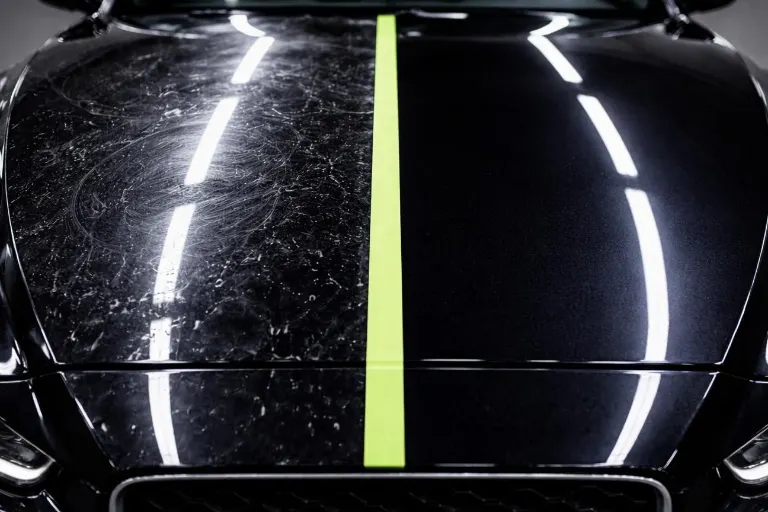
Before-and-after photos are visual records of a vehicle’s condition before and after a detailing service.
The before photo captures the original condition of a specific area, such as a scratched paint panel, dirty car seat, cloudy headlight, or contaminated wheel.
The after photo shows the same area following the appropriate detailing process.
For example, a vehicle arriving with visible swirl marks on its hood may receive paint correction. The detailer can photograph the surface before polishing and again after the correction process to demonstrate the improvement in clarity and gloss.
Similarly, interior detailing photos can show the difference after removing dirt, dust, stains, and other visible contamination from suitable surfaces.
The key is to capture genuine results under consistent conditions.
Why Before-and-After Photos Matter for a Professional Detailing Business
1. Build Customer Trust Through Real Results
Trust is essential when customers choose a detailing studio.
A customer considering ceramic coating, paint correction, or interior restoration may not know how to evaluate the quality of the service. Before-and-after photos provide a clearer understanding of the work performed.
When customers see genuine detailing transformations, they can better understand what a professional service may achieve.
For example, a detailing studio can showcase a vehicle with visible paint imperfections before correction and a clearer, more refined finish afterward.
Real photographs help communicate the process without relying only on marketing statements.
2. Showcase Professional Detailing Skills
Professional detailing involves more than washing a vehicle.
Services such as paint correction, PPF installation, ceramic coating, and interior restoration require appropriate products, techniques, preparation, and attention to detail.
Before-and-after photos help a detailing business showcase these skills.
A paint correction specialist may demonstrate improved paint clarity. An interior detailing team may show the results of cleaning fabric seats or restoring the appearance of leather surfaces.
These examples help potential customers understand the range of services offered by the studio.
3. Improve Social Media Marketing
Social media platforms such as Instagram, Facebook, and YouTube are useful channels for sharing automotive detailing content.
Before-and-after photos provide a natural format for visual posts.
A detailing business can create:
- Side-by-side transformation images.
- Instagram carousel posts.
- Short detailing transformation reels.
- Customer vehicle showcase posts.
- Paint correction comparison images.
- Interior cleaning transformation posts.
For example, a carousel post can show the original condition of a car seat, the cleaning process, and the final result.
This type of content gives viewers a clear visual story and provides a useful reason to engage with the business.
4. Help Customers Understand the Value of Detailing Services
Some customers may consider professional detailing expensive compared with a regular car wash.
Before-and-after photos can help explain the difference between basic cleaning and specialized detailing.
A regular wash may remove surface dirt, while paint correction focuses on reducing certain paint defects through controlled polishing. Interior detailing may involve more thorough cleaning of suitable materials and hard-to-reach areas.
Showing the actual results can help customers understand why different services require different levels of expertise, equipment, and time.
It is important to explain the service accurately rather than suggesting that every defect can be completely removed.
5. Support Better Customer Enquiries and Conversions
When potential customers visit a detailing website or social media page, they often want to see examples of previous work.
A well-organized photo gallery can help them evaluate the studio’s capabilities.
For example, a customer interested in headlight restoration may look for photographs showing the condition of the headlights before the service and their improved clarity afterward.
A customer considering PPF may want to see close-up images of installation quality, edges, and finished panels.
Relevant visual examples can make enquiries more informed and help customers discuss their requirements with the detailing team.
6. Strengthen Your Website’s Professional Appearance
A detailing website becomes more informative when it includes real photographs of completed work.
Instead of relying entirely on generic automotive images, a studio can create dedicated galleries for different services.
Useful website sections include:
- Paint Correction Before and After.
- Ceramic Coating Results.
- Interior Deep Cleaning.
- Headlight Restoration.
- PPF Installation Showcase.
- Luxury Car Detailing Gallery.
These sections help visitors understand the services and provide visual evidence of the studio’s work.
Original, properly optimized images can also contribute to the website’s SEO when they are relevant to the page, compressed appropriately, and supported by descriptive alt text.
7. Create a Strong Portfolio for Your Detailing Business
A portfolio is useful for showing the experience and capabilities of a detailing studio.
Before-and-after photos can be organized by vehicle type, service, or project.
For example, a portfolio may include:
- Luxury sedan paint correction.
- SUV interior deep cleaning.
- Headlight restoration.
- Ceramic coating preparation.
- PPF installation on selected body panels.
Over time, this collection can become a valuable business asset.
It helps the studio demonstrate its work to prospective customers, business partners, and franchise enquiries without having to explain every service from scratch.
8. Encourage Customer Engagement and Referrals
Customers often enjoy seeing the transformation of their own vehicles.
Sharing approved photographs with customers after the service can create a positive experience.
A customer may choose to share the images with friends, family, or on social media. This can introduce the detailing business to new audiences.
However, customer consent should always be obtained before publishing vehicle photographs publicly.
License plates, personal belongings, house numbers, and other identifying details should be removed, obscured, or excluded where appropriate.
The goal is to showcase the detailing work respectfully and professionally.
How to Capture Professional Before-and-After Detailing Photos
Capturing useful transformation images does not require expensive photography equipment. A smartphone with a good camera can be sufficient when used carefully.
Step 1: Capture the Vehicle Before Starting Work
Take photographs before washing, polishing, or cleaning the vehicle.
Focus on the areas that clearly show the original condition, such as swirl marks, dirty wheels, stained seats, or cloudy headlights.
Step 2: Use Consistent Lighting
Lighting can significantly affect how automotive paint appears in photographs.
Try to capture both images in the same lighting environment. Inspection lights may be useful for showing paint defects, while consistent studio lighting can help document the final finish.
Avoid comparing a dark before photo with an overly bright after photo.
Step 3: Maintain the Same Camera Angle
The before and after photographs should show the same panel or area from approximately the same angle and distance.
This makes the comparison easier to understand and reduces the possibility of creating a misleading impression.
Step 4: Keep the Images Clear and Clean
Clean the camera lens before taking photographs.
Avoid unnecessary filters, excessive editing, or artificial effects that change the appearance of the vehicle’s paint.
The photographs should represent the actual result.
Step 5: Organize Images by Vehicle and Service
Store images in folders based on the vehicle, service type, and date.
For example:
Vehicle: Black Sedan
- Before Paint Correction.
- During Polishing.
- After Paint Correction.
- Final Inspection.
Organized photographs make it easier to prepare website galleries and social media content later.
Common Mistakes to Avoid
Before-and-after photos are most effective when they are accurate and professionally presented.
Avoid the following mistakes:
- Using unrelated stock photos as proof of completed work.
- Changing camera angles between before and after images.
- Applying excessive filters or artificial enhancement.
- Publishing customer vehicle photos without permission.
- Leaving visible license plates or personal details.
- Showing only the final result without explaining the service.
- Making unrealistic claims about scratch removal or protection.
- Uploading large, uncompressed images that slow down the website.
Authenticity is more important than making every photograph look perfect.
How The Detailing Maniacs Can Use Before-and-After Photos
The Detailing Maniacs offers professional car detailing services, including paint correction-related care, PPF, ceramic and graphene coatings, foam wash, headlight restoration, and interior and exterior restoration. <Cite refs={[“turn234552search0″,”turn234552search1”]}/>
Before-and-after photography can support the presentation of these services by showing real vehicle transformations.
For example, a paint correction gallery can demonstrate improvements in paint clarity. An interior detailing gallery can showcase cleaning results, while a headlight restoration gallery can display changes in lens clarity.
These photographs can be used across the website, service pages, social media platforms, and customer communication, provided the images are genuine and approved for publication.
Visit The Detailing Maniacs to explore professional automotive detailing services and vehicle care solutions.
Conclusion
Before-and-after photos play an important role in a professional detailing business because they provide visual evidence of the work performed.
They help build customer trust, showcase detailing expertise, support digital marketing, improve website presentation, and create a portfolio of completed projects.
The most effective transformation photographs are genuine, clear, consistently captured, and presented honestly.
For detailing professionals, making photography a regular part of the service workflow can be a simple yet valuable business practice. Every completed detailing job offers an opportunity to document the results and demonstrate the quality of the work.